Project: Tumor-driven deformation of fibre bundles using volumetric simulations and mesh modeling
Description
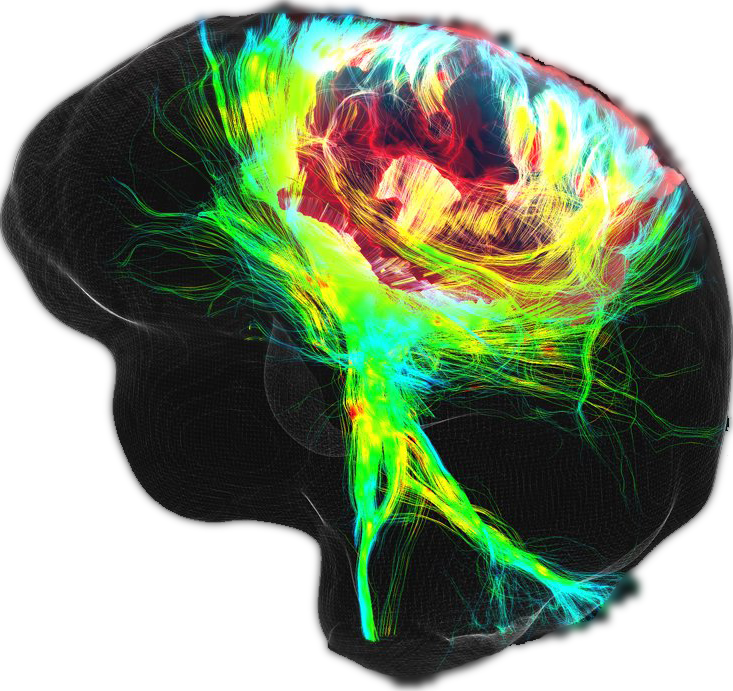
This project investigates how brain tumors deform surrounding white matter fibre bundles, with the aim of improving our understanding of tumour–tract interactions and their clinical consequences. Tumor growth exerts complex biomechanical forces that can stretch, compress, or displace neural pathways, affecting both neurological function and surgical planning. To study this process, the student will develop computational models of tumour expansion and apply them to brain tissue representations, enabling the simulation of fibre bundle deformation under varying growth patterns and tumor morphologies. This work will provide insight into how structural connectivity is altered as tumors evolve.
The research will leverage volumetric growth simulations and finite element mesh deformation techniques to model realistic tumor-induced displacements of white matter bundles. Data science and AI methods will be applied to analyse deformation patterns, extract quantitative metrics of tract displacement, and explore predictive modeling of functional impairment risk. The project will emphasize both visualization and statistical analysis of simulated results, with potential applications in neurosurgical planning, prognosis, and the development of more robust tools for patient-specific brain modeling.
Details
- Supervisor
-
 Maxime Chamberland
- Secondary supervisor
-
 Besm Osman
- Interested?
- Get in contact