Project: Visualization for Brain Network Surgery
Description
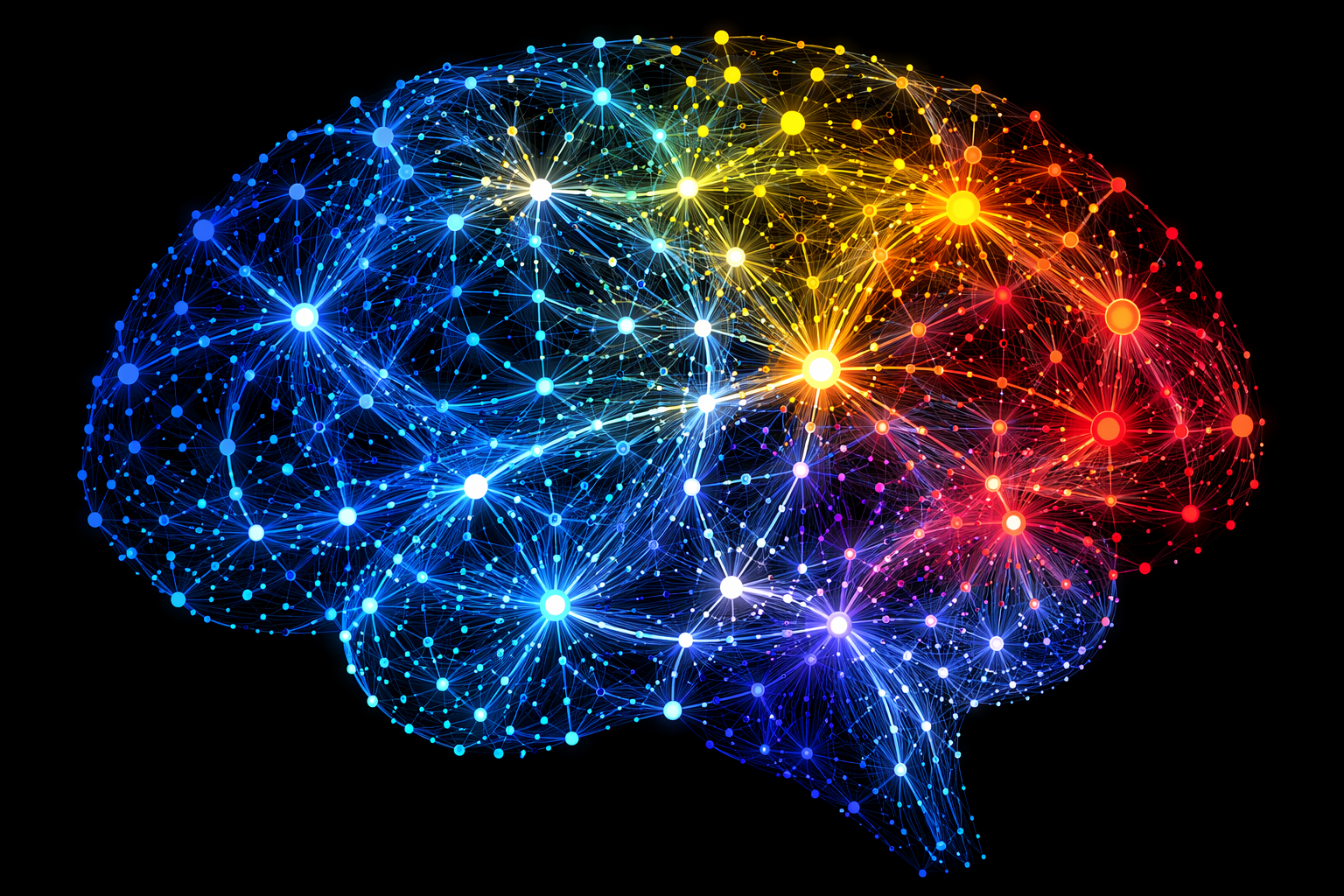
Modern neuroscience views brain function as originating from networks connected by white matter tracts rather than from isolated cortical areas. During awake brain tumor surgery, neurosurgeons use a technique known as direct electrical stimulation (DES) while the patient is carrying out a cognitive task. If this leads to altered behavior, it indicates that the DES site is close to critical cognitive or motor pathways. These pathways can be visualized for individual patients on the basis of diffusion MRI–based tractography, which is performed both before and after surgery.
Finding correlations between (functional) DES reponses and nearby (structural) white matter tracts is one of the main aims of neurosurgeons research.
At Elisabeth-TweeSteden Ziekenhuis (ETZ) in collaboration with TU/e, we have collected cohort data with DES and MRI tracking information. We developed a prototype algorithm that computes spatial distances between DES stimulation sites and white matter pathways in 3D. This leads to a complex multi-dimensional data analysis challenge, in which the following variables play a role:
· 3d coordinate of DES sites (including uncertainty due to intraoperative brain shift), including
◦ type of cognitive test carried out
◦ altered response category
· cortical or subcortical brain region
· estimated white matter fiber bundles, computed from diffusion MRI, including
◦ distances between DES site and each bundle
The data is rich and has the potential to provide understanding on the relation of different types of brain function and white matter structures. Most of this aspects are unknown and automatic methods are not effective since the analysis is exploratory and with the aim to generate hypothesis.
Visual analytics is a promising solution to facilitate get the required insight and generate hypothesis based on the complex data obtained at ETZ.
You will:
- Analyze and understand clinical context for the neurosurgeons. Understand the data and neurosurgeons tasks to achieve the aim of finding the relationships between function and bundles.
- Design and implement a visual analytics solution that supports hypothesis generation by exploration of the DES / fiber tracking data at patient and cohort level.
What we offer
· unique clinical data from awake brain surgery
· hands-on experience with medical context
· collaboration with neurosurgeons, neuropsychologists, and AI researchers
· opportunity for publication and real clinical impact
· multidisciplinary supervision both ETZ and TU/e
Profile
· Master student in Data Science, or Computer Science
· Good programming skills with experience with Python. The project might use other programming languages such as JavaScript (D3).
· Knowledge in visualization and interest in medical imaging, and healthcare AI
· team player who enjoys working in a clinical research environment
Details
- Supervisor
-
 Anna Vilanova
- Secondary supervisor
-
 Rembrandt Bakker