Project: Multi-Focus Process Maps
Description
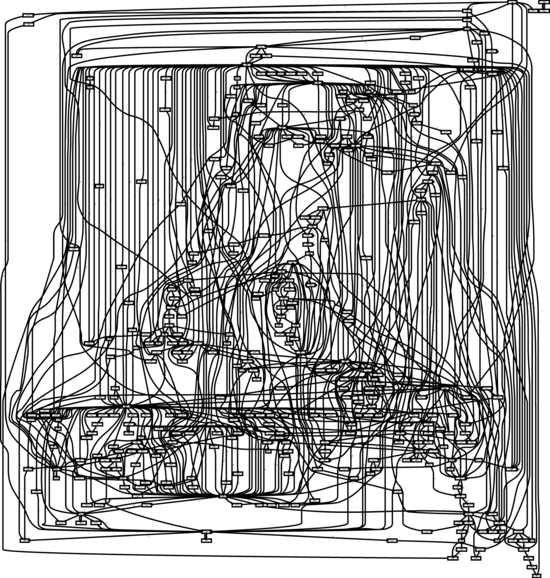
Process maps are among the most commonly used visualizations in process mining for representing process behavior extracted from event logs. However, real-world process maps often become highly complex and cluttered due to the large number of activities and transitions involved. To make these visualizations interpretable, existing tools typically rely on global filtering techniques, where users apply thresholds to remove infrequent activities or transitions using sliders.
Although these
filtering approaches simplify the visualization, they also remove potentially
relevant contextual information. More importantly, current process map
visualizations generally apply filtering uniformly across the entire process
model. This makes it difficult to inspect one part of the process in detail
while simultaneously maintaining an overview of the surrounding context.
Focus+context
visualization techniques and multi-scale interaction methods provide a
promising direction for overcoming these limitations. By supporting multiple
simultaneous levels of detail, analysts may be able to explore complex process
behavior more effectively without losing global structure.
Focus of the Project
This project
explores new visualization and interaction techniques for multi-focus process
maps. The goal is to design a process visualization where different regions of
the process map can be shown at different levels of abstraction simultaneously.
Instead of globally filtering the entire process map, analysts should be able
to selectively “zoom in” on specific sub-processes while maintaining an
overview of the rest of the process.
The project
focuses on the design and implementation of a prototype visualization system
that supports localized filtering and multi-scale exploration. Potential
research topics include:
- Multi-focus or focus+context visualization techniques
for process maps.
- Smooth transitions between abstraction levels.
- Interaction techniques for navigating between overview
and detail.
- Evaluation of how multi-focus exploration affects
process understanding and analytical performance.
The project may involve concepts from hyperbolic visualization, semantic zooming, or distortion-based interaction techniques to support simultaneous overview and detail representations.
The project is expected to last 6 months, and at the end, the
student should deliver a report describing the work performed, the methodology
used, and corresponding findings. It is expected that the results can be used
in a scientific journal publication.
Requirements:
- Good programming skills
- Visualization knowledge on design-centered approach (e.g., Munzner)
- Ability to use and apply PM models
Details
- Supervisor
-
 Stef van den Elzen
- Interested?
- Get in contact